Why You Should Stop Trying To Be More Confident

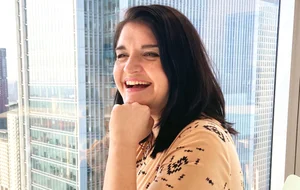
Photo by Xenia Bogarova on Unsplash
Have you ever thought to yourself “I’d do that if I had more confidence”? Have you ever googled “How do I become more confident?”? If you have, I want to ask you - implore you even - to stop.
Confidence is a big misnomer.
When I was starting my business, I asked a handful of former colleagues what they had learned from me or seen others learn from me over the years, things that my future clients might benefit from. Confidence came up a lot. I had a reputation for having a lot of confidence.
High confidence is equated with success, self-esteem, going after what you want, thinking big. While low confidence is equated with lower self-esteem, not going after what you want and thinking small. Why wouldn’t we all want more confidence?
I think we’re missing the point. Confidence isn’t a starting point or prerequisite. It’s not something you mentally cultivate through sheer will, positivity or the right ‘mindset’.
Confidence is a by-product of courage. It comes last, not first.
What we should all be trying for is more courage. Courage means taking action despite feeling unsure or uncomfortable – not waiting around for that fear to go away first. Having courage = taking action = more confidence. It doesn’t work the other way around.
Knowing this helps to alleviate the burden of not being able to take action because of a lack of confidence. Instead, it frees yourself up to push outside your comfort zone which, over time, grows your confidence.
Courage and discomfort are neighbours
Wishing away discomfort - and thinking that when it goes away you’ll take action - won’t get you anywhere.
I teach people how to present more effectively and be more confident when speaking. This sometimes requires me to get up and present in front of a room (or Zoom) full of people. The pressure is really on to be a really good presenter if your topic is How to be a good presenter. After many years, I still have moments of discomfort in the lead up to a session but, because of courage, I take action anyway.
I’m sure the audience thinks I’m confident but actually, if I was waiting around for complete confidence before I stepped in front of that crowd, I’d never do it. I’ve learned to accept that my natural fight and flight response will kick in, in a primal attempt to keep me safe. I accept the discomfort as a natural physiological state and trust that it will dissipate the moment I start. And every single time it does.
A handy tool I use in these moments is to turn that nervous energy into excitement (it’s the same sensation anyway). I tell myself I’m excited, I’m brave and I’m ready – I throw a couple of Amy Cuddy power poses and I get out onto stage.
Mastery begins with not knowing
Think about something you’re already so comfortable with you don’t require confidence to do it. If you’re struggling to come up with something, think of your every day: driving a car, riding a bike, going to work. They may seem like minor examples because they’re so effortless now but before you mastered them, they also started out as something new. Starting a new job, for example, can be nerve-wracking – going into a new environment for the first time, meeting new people, not knowing where anything is.
In anything, there is a normal period of discomfort but the more you do something, the more proficient you become and the easier those actions are to take. Eventually you have a natural ease and you no longer need to be propelled by courage because you’ve put in the work and developed confidence.
Think about something you’d like to do that you’ve not done yet because of a lack of confidence. Now imagine someone who did have the confidence – what are some of the actions they might take? One of the most basic differences between you and this imaginary confident person is simply finding some courage and beginning. Pick an action from that list and commit to doing it.
All mastery begins with not knowing so start somewhere, anywhere – just start.
‘Confident’ people take risks
I’m an extrovert. I’m a drama kid. For a lot of my childhood, I wanted to be an actor. I’m not known for being shy or retiring and am considered to be very confident by friends, family and colleagues. But I haven’t always felt confident, in fact I struggled with low self-esteem as a teenager and for much of my twenties. What I always had though was gumption. I’d say ‘yes’ even when I had no idea what I was doing. I’d put my hand up. I’d throw my hat in the ring. I’d go for it.
None of this was confidence though, it was courage.
Over time, with enough courage and action, my confidence grew. For me, it emerged without me realising it, it’s only through looking back that I know it wasn’t always there. My confidence is a by-product of my courage.
I take risks. It’s a value of mine (those risks have become much more sensible as I’ve matured, thankfully). I live at the edge of my comfort zone and it helps my life to grow. A quote that I’ve often had on the walls of my bedrooms and offices over the years is by French writer Anais Nin “Life shrinks and expands in proportion to one’s courage”. These are words to live by.
Say ‘yes’ and figure it out later
I once had a boss who was constantly asking me to do things that were way out of my comfort zone and every time I said “sure!”. In fact I was often unsure, but I went for it anyway and my opportunities (and confidence) expanded exponentially.
Try saying yes to opportunities that scare you and then figure out how to do them after you’re committed.
And if you’re striving for anything, strive for courage. The pursuit of confidence is wasted energy, it’s evasive.
Strive for courage, take action and confidence will take care of itself.
Monique Shaw is an Executive Career & Leadership Coach and Brand Story Specialist helping passionate, frustrated and ambitious professionals create careers, teams and businesses that are aligned and effective. Book a consult or get in touch to explore how she can support you.